When your freight volume is high and timing matters, Full Truckload (FTL) shipping becomes your No. 1 transportation choice. FTL allows businesses to move large shipments directly from origin to destination without sharing trailer space.
For manufacturers, distributors, and high-volume shippers, this model delivers speed, control, and predictability. If you’re evaluating full truckload freight for the first time, understanding how it works and when it makes financial sense can significantly impact both cost and service performance.
TL;DR
-
FTL stands for Full Truckload shipping. It means booking an entire tractor-trailer to move your freight from pickup to delivery without sharing space with other shippers.
-
Most standard 53’ trailers can hold up to 26 standard pallets (48” x 40”) with a maximum weight limit of approximately 44,000 lbs.
-
If you’re new to truckload shipping, partnering with a freight forwarder can help secure competitive rates, manage carrier relationships, and ensure on-time, damage-free delivery.
What is FTL freight (Full Truckload)?
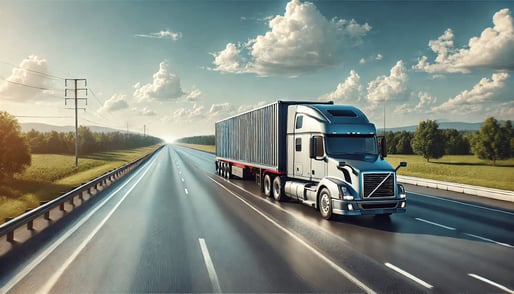
FTL means full truckload. Booking a full truckload shipment means reserving an entire tractor-trailer for your freight. The truck is dedicated to one shipper and typically moves directly from pickup to delivery with minimal stops.
It’s called full truckload because you are securing the entire trailer, even if it’s not completely filled. That distinction matters. Unlike shared shipping models, your freight is not mixed with other shipments.
FTL is commonly used for large, dense, time-sensitive, or high-value shipments where direct transit and reduced handling are priorities.
What is the difference between LTL and FTL freight?
Understanding the difference between FTL and LTL comes down to trailer usage, handling, and routing structure.
Full Truck Load (FTL)
In FTL shipping, the entire trailer is reserved exclusively for one customer’s freight. The truck makes fewer stops and generally moves directly from origin to destination.
Best for:
✅ FTL reduces handling risk, improves predictability, and often delivers stronger unit economics at higher volumes.
Less-Than-Truckload (LTL)
LTL combines freight from multiple shippers into one trailer. Each shipper pays only for the space used, and freight moves through terminal hubs.
Best for:
- Smaller shipments,
- Lower shipping volumes,
- Flexible delivery patterns.
⚠️ While LTL lowers upfront cost for small shipments, it involves more handling points and longer transit timelines.
The decision is operational and financial. If you are paying for a full trailer, you want to maximize utilization. If volume is limited, sharing space may be more economical.
FTL vs. LTL comparison table
| Feature |
FTL |
LTL |
| Trailer Usage |
Exclusive |
Shared |
| Cost Efficiency |
Better at higher volumes |
Better for smaller shipments |
| Handling |
Minimal |
Multiple handling points |
| Transit Time |
Faster, direct |
Slower, hub-based |
| Risk of Damage |
Lower |
Higher |
Pros & cons of FTL
Advantages of full truckload shipping
Shipping full truckload offers several clear advantages when properly aligned with shipment size and business needs.
1. Cost efficiency & operational clarity
FTL typically operates on a flat-rate structure. When shipping large volumes, this can be more cost-effective than coordinating multiple LTL shipments.
Beyond base rates, you can negotiate more favorable pricing when you establish predictable routes or recurring lanes. Regular domestic transportation schedules often create leverage for rate stability.
FTL also reduces accessorial charges commonly associated with LTL shipments.
Operationally, managing a single truckload simplifies documentation and billing. You have:
This streamlines back-office processes and reduces administrative friction.
2. Speed & predictability
FTL moves directly from point A to point B. Because there are no terminal transfers or multiple deliveries, transit times are generally faster and more consistent.
You can also coordinate guaranteed pickup and delivery windows. For operations that rely on tight scheduling, this level of predictability supports production planning and inventory management.
FTL enables trailer pools and drop-and-hook programs, allowing you to preload trailers and reduce dock congestion. That operational flexibility often translates into measurable efficiency gains.
3. Greater control
With FTL, your freight occupies the entire trailer. That means:
- Fewer handling events,
- Reduced exposure to damage,
- Dedicated transport conditions.
If your freight requires specific loading procedures or temperature considerations, a dedicated trailer provides greater oversight.
FTL shipments are easier to monitor through modern tracking systems, giving you real-time visibility into location and status. This improves labor planning, inventory positioning, and customer communication.
Disadvantages of full truckload shipping
FTL is not always the most economical solution. If the trailer is only partially utilized, you are still paying for the full capacity.
For example:
- If you’re shipping 24 pallets from New Jersey down to Charlotte, a full truckload is the most efficient option.
- If you’re moving 22 pallets from Austin up to Denver, dedicating a truck keeps the route direct and the timing predictable.
- But if you only have 3 pallets heading from Toronto to Cleveland and another 4 going to Pittsburgh, booking a full truck may not make financial sense.
- The same applies if you’re shipping a handful of pallets from New Jersey to Boston and a few more to Richmond. Splitting deliveries on one truck can quickly drive up unnecessary costs.
When freight volume does not justify full trailer usage, the cost per unit increases. The key is maximizing trailer utilization. If you’re paying for the entire truck, you want to ensure you’re not moving empty space.
When does it make sense to choose FTL?
FTL is ideal when:
- You are shipping 12 to 26 standard pallets.
- Freight weighs close to trailer capacity.
- Transit speed is critical.
- Handling risk must be minimized.
- Delivery windows are strict.
ℹ️ You do not have to completely fill a trailer to book FTL. However, optimizing load density ensures stronger financial outcomes.
Move full truckload freight with confidence
Reliable FTL performance starts with the right carrier, strong safety standards, and disciplined route planning. In today’s environment, real-time tracking, digital documentation, and performance visibility are essential.
At VinWorld, we are your trusted freight forwarder. We combine vetted capacity with operational oversight to deliver predictable execution, cost transparency, and truckload freight that moves with clarity and control.
Let us design a logistics solution that fits your business. Request a quote.
FAQs
Is FTL cheaper than LTL?
FTL is typically more cost-effective when shipping larger volumes. If you can utilize most of the trailer space, the flat-rate structure often results in lower per-unit transportation costs compared to multiple smaller LTL shipments.
Is LTL more expensive than FTL?
LTL can be more expensive per pallet when shipment volume increases. While LTL reduces upfront cost for smaller loads, higher volumes often benefit from the dedicated capacity and efficiency of FTL.
What's the difference between FTL and LTL?
FTL dedicates an entire trailer to one shipper with direct routing. LTL combines shipments from multiple shippers and routes them through terminal hubs. FTL reduces handling and transit time, while LTL prioritizes shared cost efficiency.
What is the purpose of FTL shipping?
The purpose of FTL shipping is to move large volumes efficiently with minimal handling and faster transit. It is designed for shipments requiring dedicated capacity, improved security, and more predictable delivery schedules.
How many pallets fit in an FTL shipment?
Most standard 53’ trailers can accommodate up to 26 standard pallets (48” x 40”). Shipments between 12 and 26 pallets typically align best with full truckload economics. Non-standard pallet sizes may reduce total capacity, though.
What is the FTL weight limit?
Standard tractor-trailers generally operate with a maximum freight weight limit of approximately 44,000 lbs (19,958 kg). Actual allowable weight may vary depending on equipment type, axle configuration, and state regulations. For project and heavy cargo transportation, specialized equipment, permit coordination, and route engineering are required to ensure compliance, safety, and uninterrupted delivery.



Comments