Ship smaller ocean loads without paying full-container rates. Keep partial-container freight moving with cost control and routing flexibility.
A half-full container still carries a full-container cost. That unused space becomes margin you’ll never recover. But waiting until you have enough volume to justify your own box creates a different risk: missed departures, delayed inventory, and limited options when capacity tightens. That waiting window becomes even riskier in peak season, when carriers protect space for higher-volume freight and smaller shipments are more likely to be rolled, repriced, or pushed to a later sailing.
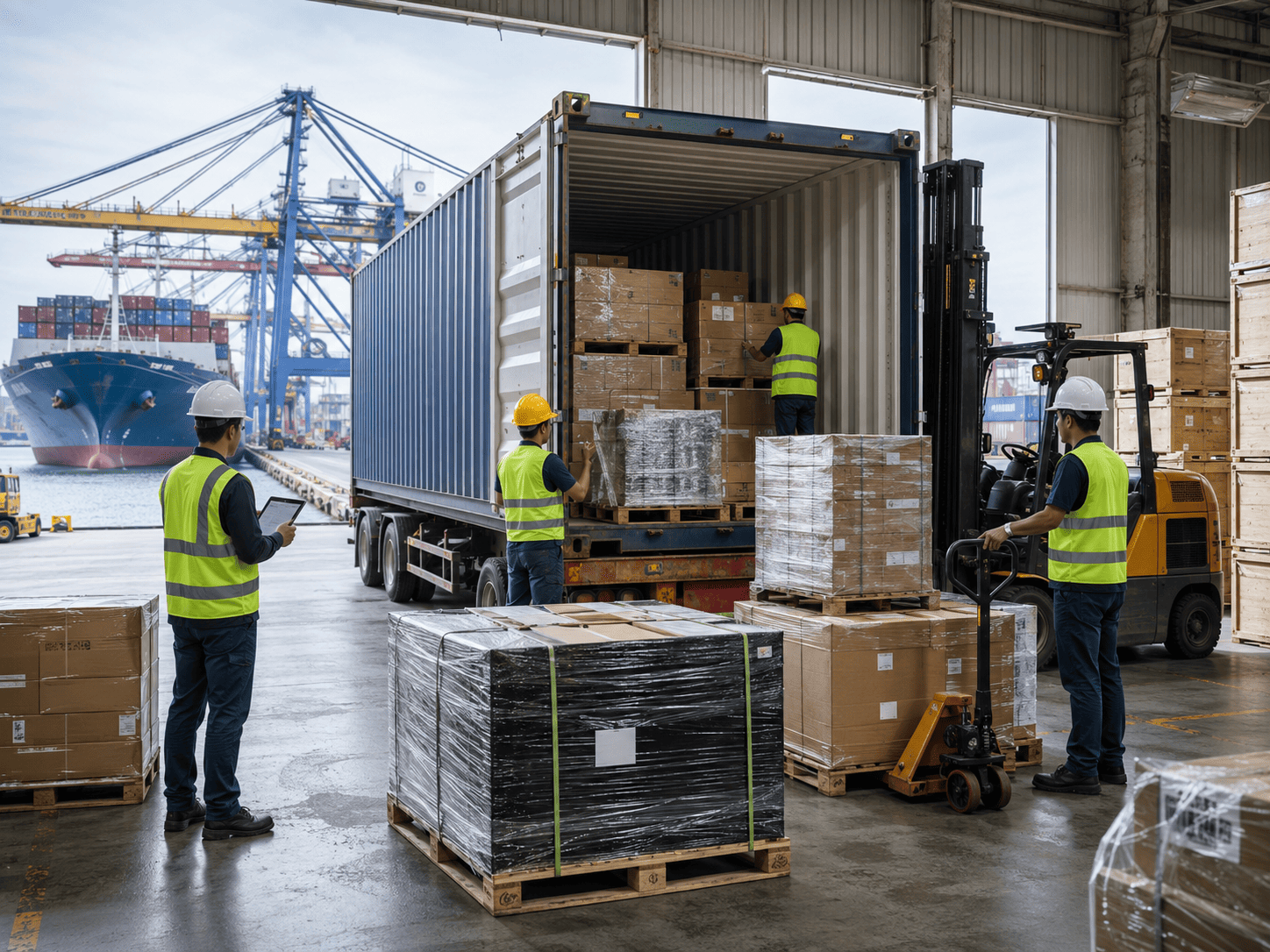
Ocean freight consolidation removes that trade-off. VinWorld combines your smaller shipments into one container, then ships it on regular, fixed-schedule ocean services. LCL consolidation runs door-to-door: origin pickup, CFS handling, customs coordination through vetted partners, and final delivery, all under one point of contact. We also provide 24/7 support and visibility at every handoff.
When ocean space tightens, the weakest bookings are usually the first to move. For exports, VinWorld uses its own steamship-line contracts; for imports, we have established local-agent contracts at origin. That gives your cargo competitive rates, stronger space access, and bookings less likely to fail when capacity tightens.
LCL freight can lose momentum when consolidators, carriers, and destination handlers work in silos. VinWorld matches your cargo to the right consolidator and carrier for the lane, then keeps coordination under one point of contact, with GPS-tracked visibility, milestone control, and post-arrival execution managed through delivery.
When smaller ocean loads are booked late, the savings from LCL can disappear into accessorial charges and avoidable dwell time. VinWorld structures consolidation around your cargo profile, lane, and deadline so you use only the space required while protecting cost control before port charges start to build.
Not every shipment is a standard pallet. We consolidate refrigerated freight, oversized pieces, and out-of-gauge cargo that most shared-container services turn away, matching each load to the right equipment so it still moves on schedule.
You pay only for the cargo space you need, not unused container capacity
You move smaller quantities more often without waiting to fill a full container
You reduce inventory pressure by keeping replenishment cycles smaller, cleaner, and more predictable
You keep customs, tracking, and delivery milestones visible through one coordinated process
You have the option to shift modes before departure when deadlines, risk, or customer commitments change
Each of our services combine to achieve our mission: to provide
reliable and customized international logistics solutions to the global marketplace,
while keeping our customers in the know at all times.
We offer access to top-tier carriers at competitive rates, navigating customs clearance and documentation to get your cargo from door to door efficiently and safely.
We offer simple and seamless end-to-end solutions to help you manage your inventory to boost sales while reducing space, overproduction, and waste.
With direct relationships with more than 20 major airlines, we’ll assist you in every step of the way so your cargo remains safe, in good condition, and on-time.
Safely ship oversized, sensitive freight with tailored logistics plans that are executed to your exact requirements.
Rely on our extensive network of partners for specialty logistics like transloading, over-the-road (OTR) transport, hazardous materials handling, expedited services, and more.
Protect fresh, frozen, and temperature-sensitive goods with vetted reefer capacity, compliant handling, temperature control, and 24/7 shipment support.

LCL (Less than Container Load) is ocean freight that does not fill a container on its own. Consolidation combines several of these shipments into one container at a CFS, ships it as a full load, then deconsolidates at destination so each reaches its consignee.
It is combining several less-than-container-load shipments into one full container at a freight station, moving them together by sea, then separating them at destination. Shippers pay per volume rather than for a whole container.
LCL works when you do not have enough cargo to justify a full container, but still need ocean freight to move on a controlled schedule. Instead of waiting to build a full load, you share container space with compatible cargo, reducing unused capacity, protecting cost control, and keeping smaller shipments moving.
Yes, when the cargo profile, documentation, and routing support it. Hazardous and temperature-controlled consolidation require tighter screening, compatible freight pairing, and carrier approval. VinWorld reviews classification, handling needs, temperature range, and compliance exposure before building a safe, viable consolidation plan.
CFS stands for Container Freight Station. It’s where shipments are consolidated for export and deconsolidated on import. It is where your cargo is combined, documented, and prepared for its sailing.
LCL volume is usually calculated in cubic meters, or CBM. Measure the cargo’s length, width, and height in meters, then multiply them: L × W × H = CBM. Weight still matters, because chargeable volume may depend on how dense, heavy, or irregular the cargo is.
Yes. VinWorld can coordinate import and export customs clearance as part of the LCL shipment process. That keeps documentation, classification, duty exposure, and release milestones connected instead of leaving clearance as a separate risk point at origin or destination.
Move your next ocean shipment on shared space, on schedule, and within budget.