
Shipping from China to USA destinations moves more containerized volume than any other trade lane on the planet. It also carries more cost variables than most importers plan for. Between a booking in Shenzhen and a delivery appointment in Chicago sit a dozen decisions:
- Mode,
- port pair,
- container type,
- Incoterm,
- HTS classification, and more.
Every one of them moves the final number. This guide covers what a logistics buyer needs before committing volume to the lane, which method fits which shipment, how long each realistically takes door to door, what the landed cost looks like once duties and fees hit, and where the avoidable charges hide.
TL;DR
- Ocean FCL is the default: roughly 15-35 days port to port, 30-45 door to door, and the cheapest per unit once a shipment fills a box.
- LCL suits partial loads. It costs more per cubic meter than FCL, but avoids paying for air you aren't shipping.
- Air wins on urgency. 3-7 days in transit, typically 5-10x the ocean rate per kilo.
- Duties now outweigh freight on many classifications, once Section 301 tariffs and other trade measures are added to the base duty rate.
- De minimis is gone. Low-value parcels from China no longer clear duty-free under $800.
- Demurrage is avoidable. It is a scheduling failure at the destination port, not a standard freight cost.
The Four Ways to Move Freight From China to the U.S.
There is no single best method on this lane; only the right fit for a given shipment's volume, value, and deadline. Most importers end up running two or three in parallel.
Full container load (FCL)
One shipper, one container, one seal from origin to destination. A 20ft container holds roughly 28 CBM and a 40ft high cube around 68 CBM, so FCL becomes the economic choice somewhere above 13-15 CBM. Cargo is not handled between the factory and the consignee, which reduces damage exposure and speeds customs release.
Less than container load (LCL)
For shipments too big for air and too small for a box of their own, sea freight from China to USA ports moves via consolidation. A consolidator combines pallets from multiple shippers into one container on a scheduled service; a weekly Ningbo to Chicago sailing, for instance. The trade-off is handling: cargo is stuffed at origin and deconsolidated at destination, adding three to seven days and two more touchpoints. This guide to consolidated shipping breaks down how those services are built.
Air freight
Air freight from China to USA gateways is the answer when the cost of being late exceeds the cost of flying, for example:
- production line stoppages,
- seasonal launches,
- high-value electronics,
- replenishment that missed its vessel.
Airlines charge based on whichever is higher: the shipment’s actual weight or its size-based “volumetric weight.” As a result, large but lightweight cargo may cost more to ship than its weight alone would suggest.
Express courier
Integrators handle samples, spare parts, and parcels under roughly 10 kg door-to-door in three to five days, customs included. Above that weight, the per-kilo economics fall apart quickly, and consolidated air shipping from China to USA gateways becomes more reasonable.
All Methods to Move Freight From China to the U.S.
|
Method |
Transit |
Best fit |
Cost |
|---|---|---|---|
|
FCL ocean |
15-35 days port to port |
15+ CBM, stable demand |
Lowest per unit |
|
LCL ocean |
20-40 days port to port |
2-15 CBM, partial loads |
Low, higher per CBM |
|
3-7 days airport to airport |
Urgent, high-value, low-density |
High |
|
|
Express courier |
3-5 days door to door |
Under 10kg, samples |
Highest per kg |
Mode choice is not permanent. Many importers ship the launch quantity by air and the replenishment by ocean, protecting the date without paying air rates on the full order.
How Long Does Sea Freight Take From China to the USA?
The honest answer to how long sea freight takes from China to USA ports is that the ocean leg is the predictable part. Port-to-port sailing times have been broadly stable; the variability sits at either end: origin cutoffs, rolled bookings, terminal dwell, chassis availability, and the inland move.
Port-to-Port vs. Door-to-Door Transit Times (China to US Cities)
|
Lane |
Sailing |
Door to door |
|---|---|---|
|
Shanghai → Los Angeles |
14-18 days |
25-32 days |
|
Shenzhen → Los Angeles |
15-19 days |
26-33 days |
|
Ningbo → New York (via Panama) |
30-35 days |
40-48 days |
|
Shanghai → Chicago (USWC + rail) |
16-20 days + 5-8 rail |
32-40 days |
|
LCL adjustment |
– |
+3-7 days |
Air Freight Transit Times From China
Air moves in days rather than weeks, but the flight is the shortest part of the journey.
- Airport to airport: 1-2 days on direct services from Shanghai, Shenzhen, or Hong Kong to LAX, ORD, or JFK
- Realistic door-to-door: 3-7 days, including origin pickup, export clearance, consolidation, and final delivery
- Next flight out (NFO): 1-3 days, priced accordingly, for AOG and line-down situations
Transpacific capacity is not infinite. Roughly half of all air cargo travels in the belly of passenger aircrafts, so schedule changes on passenger routes directly affect what is bookable for freight (worth understanding before promising a date).
What Does Shipping From China to USA Actually Cost?
Anyone quoting a fixed average shipping cost from China to US destinations without knowing the commodity, the volume, and the week of the transit is simply guessing. Transpacific rates move weekly against capacity, blank sailings, and demand cycles, and they have swung by multiples within a single year. UNCTAD's Review of Maritime Transport documents how volatile the container market has become since 2020.
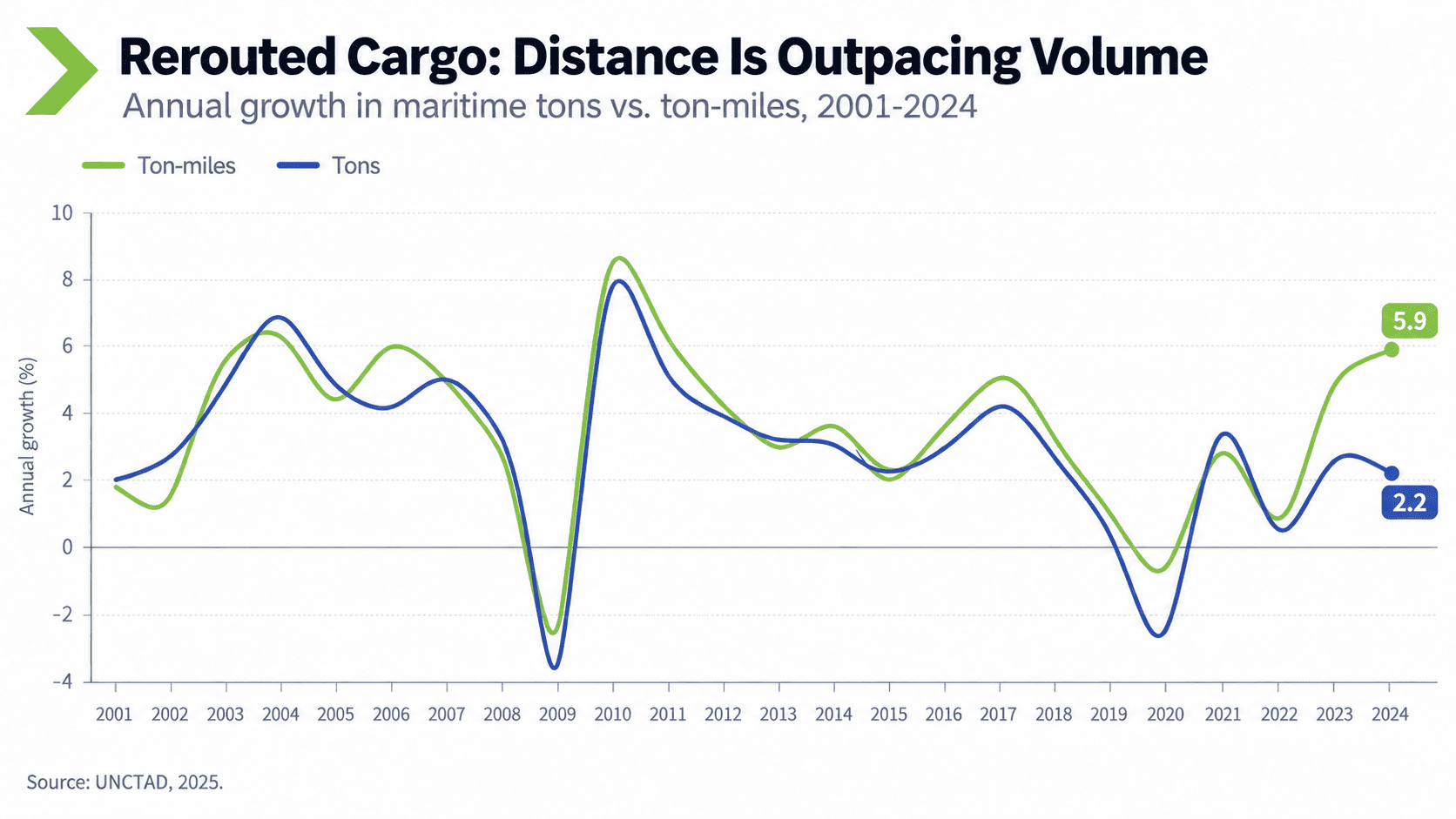
The indicative ranges below give a planning baseline:
|
Mode |
Indicative price range (2026) |
Priced on |
|---|---|---|
|
FCL 20ft |
$1,000-$3,200 per container |
Container, port pair, season |
|
FCL 40ft |
$1,800-$4,500 per container |
Container, port pair, season |
|
LCL |
$60-$180 per CBM plus fixed charges |
Revenue ton: 1 CBM or 1,000kg |
|
$3.50-$7.50 per kg |
Chargeable (volumetric) weight |
|
|
Express courier |
$20-$60 per kg |
Actual or volumetric weight |
The freight quote is only part of your landed cost. LCL charges by weight or volume, whichever is higher, while fixed destination fees make small shipments disproportionately expensive per unit.
Shipping From China to USA: What Can Change the Cost and Timeline
That gap between sailing time and delivery is where most schedule promises break. A container discharged at Los Angeles or Long Beach still has to clear customs, get a chassis, and move inland. The ports themselves run at volumes worth watching, with the Port of Los Angeles publishing monthly container throughput that signals congestion risk well before it reaches a booking.
Planning CN to US shipping around Chinese New Year deserves its own note. Factories close for one to two weeks, ocean capacity tightens for several weeks beforehand as everyone pulls cargo forward, and rates rise with it. Book six to eight weeks ahead of the holiday, or pay for the privilege.
Fees to Expect When Shipping From China to the US
For many China-to-USA shipments, import charges now exceed the ocean freight cost. The total is rarely one duty rate; several layers may apply:
- Base HTS duty, tied to the product’s HTS classification, with rates varying widely by category (commonly up to 6.5% for consumer goods).
- Section 301 tariffs on many Chinese-origin goods; the USTR maintains an active exclusion list worth checking before every new SKU.
- Section 232 exposure now reaches beyond the obvious steel and aluminum categories. Copper, semiconductors, pharmaceuticals, critical minerals, robotics, and industrial machinery may also trigger additional review, but the risk has to be checked against the exact product, HTS code, origin, and current proclamation.
- Antidumping and countervailing duties, product- and exporter-specific, and occasionally triple digits.
- MPF and HMF are the processing and harbor maintenance fees published in CBP's user fee table. They are small fees, but they still affect landed cost. MPF applies to most formal import entries, while HMF only applies to qualifying ocean cargo moving through U.S. ports. MPF is 0.3464%, with minimum and maximum limits that adjust each year. HMF is 0.125% of qualifying vessel cargo value.
➡️ Landed cost = goods value + freight + insurance + duty stack + brokerage + destination charges + inland delivery.
Quote against that figure, never the ocean rate alone.
Compliance points that deserve attention
- The de minimis exemption no longer applies: duty-free treatment for shipments under $800 was suspended by CBP, reshaping the economics of direct-to-consumer parcel programs out of China.
- ISF filings are time-bound: the Importer Security Filing, or "10+2", must reach CBP at least 24 hours before cargo is loaded at origin. Missed, incomplete, or inaccurate ISF filings can lead to CBP penalties before the cargo has even been loaded on the vessel.
- The Incoterm decides who carries the risk: ICC Incoterms rules define where the supplier's responsibility ends. FOB gives the buyer control of the main carriage and the forwarder relationship; DDP hands everything to the seller.
Shipping from China to the USA is easier to control when freight, customs, documentation, and delivery are managed under one coordinated plan.
Move Your China-to-USA Freight With VinWorld
How to Ship From China to the USA: The Process
The mechanics of how to ship from China to USA warehouses follow a consistent sequence, whichever mode you choose:
- Classify first. Get the HTS code and full duty stack before negotiating freight, not after.
- Agree on the Incoterm. FOB origin port is the standard starting point for importers who want control.
- Book early. Two to three weeks for ocean, three to five days for air; more around Chinese New Year and Q4 peak.
- File the ISF at least 24 hours before vessel loading, with accurate supplier and consignee data.
- Clear customs. A licensed broker files the entry; a continuous bond is the practical choice above a handful of entries a year.
- Move inland. Drayage from the port, then LTL or truckload to the final destination.
That last step is where avoidable money leaks. Once free time expires, demurrage accrues at the terminal and per diem accrues on the container itself; the Federal Maritime Commission's demurrage and detention rules set out what carriers must show on those invoices.
💡 Tip: If customs paperwork is likely to take time, a bonded warehouse lets cargo move off the terminal and defer duty rather than sitting in demurrage.
Air or Ocean? Decide Per Shipment, Not Per Policy
The most common costly habit on this lane is treating mode as a standing policy. The honest test is simple: what does one week of delay cost this specific shipment?
For a pallet of replenishment stock with eight weeks of cover behind it, the answer is close to zero; it barely affects the outcome. For the component holding up an assembly line, or an AOG status, one week can cost more than flying the order. This breakdown of air freight vs ocean freight sets out the full trade-off.
Move China-U.S. Freight With Full Visibility on Cost and Timing
The China-U.S. lane rewards importers who plan the whole journey (origin booking, main carriage, customs, and the inland leg) as one coordinated move rather than four separate transactions. That means the right mode for each shipment, accurate classification before the goods ship, and drayage scheduled before free time starts running.
VinWorld coordinates ocean freight forwarding, air freight forwarding, LCL consolidation, and domestic transportation on this lane through vetted partners, with 24/7/365 support and one point of contact from origin to final delivery.
Personalized global logistics, built for door-to-door accountability with zero shipping surprises.

Frequently Asked Questions
What is the most cost-effective way to ship from China to the USA?
Full container load ocean freight is the most cost-effective per unit once a shipment fills a container. Below roughly 13 CBM, LCL consolidation usually wins because paying for unused container space costs more than the extra handling.
How long does sea freight take from China to USA ports, door to door?
Ocean freight typically runs 25-45 days door to door, depending on the port pair and inland leg; LCL adds three to seven days for consolidation, and air freight delivers in three to seven days, including clearance.
Do I need a customs broker to import from China?
Not legally, but practically yes. A licensed broker files the entry, manages classification risk, and holds the bond. For a company importing 50 containers a year of mixed apparel, self-filing rarely survives the first misclassification.
What is the difference between FOB and DDP when buying from China?
FOB means the supplier delivers to the origin port, and the buyer controls main carriage, forwarder, and customs entry. DDP means the supplier handles everything to your door, including duty, with their margin built in.
How far in advance should I book ocean freight from China?
Two to three weeks is standard. Around Chinese New Year and the Q4 peak, extend that to six to eight weeks, since capacity tightens and rates rise well before factories close.

Comments